



Share My QR |
|
Success!
Welcome to Kāneʻohe
Kāneʻohe sits beneath the Koʻolau cliffs around Kāneʻohe Bay, with neighborhoods ranging from older mid-century homes and bayfront properties to hillside estates and townhomes. It offers more space and, in many cases, more house for the money than Kailua — but the trade comes with more rain, more streams, older wastewater systems, and a few property questions that matter here more than they do elsewhere.


The place
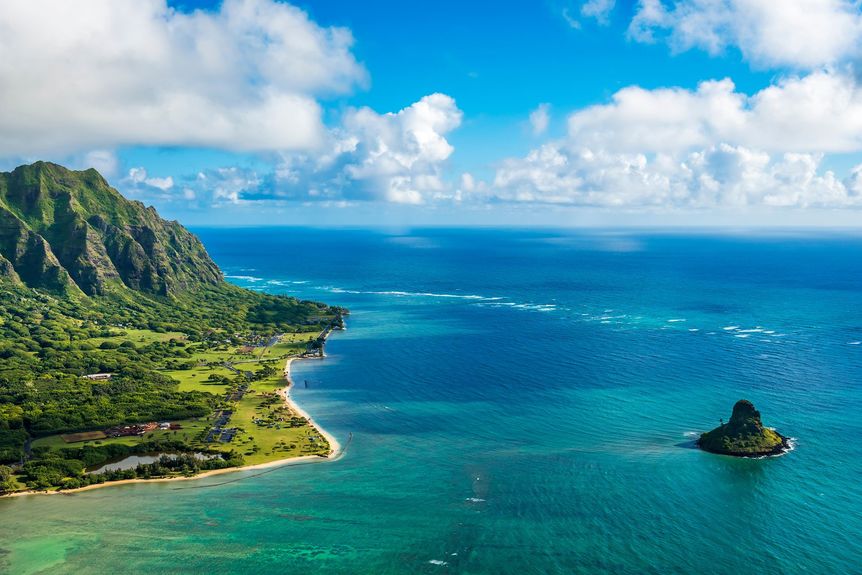
Kāneʻohe Bay occupies the flooded remains of the Koʻolau volcano's caldera. Over thousands of years, coral formed a barrier reef along the outer edge of the bay, creating the sheltered water that defines this side of the island.
The bay also carries a long cultural history. Ahu o Laka, commonly known as the sandbar, has been significant for centuries, while Moku o Loʻe — Coconut Island — is home to the Hawaiʻi Institute of Marine Biology.
At the southern end of the bay, Mokapu Peninsula is occupied by Marine Corps Base Hawaiʻi. The military presence has been part of Kāneʻohe's modern landscape since Naval Air Station Kaneohe Bay was established in 1939.
How the area is organized
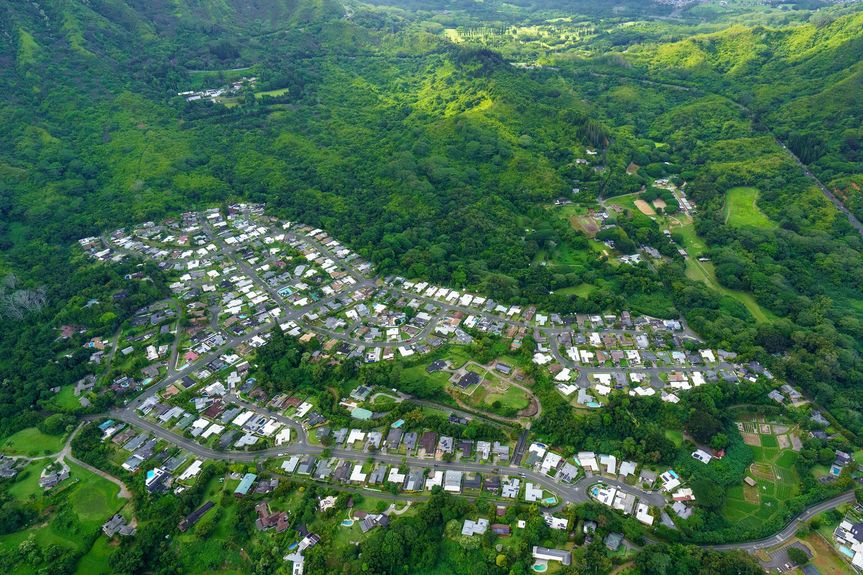
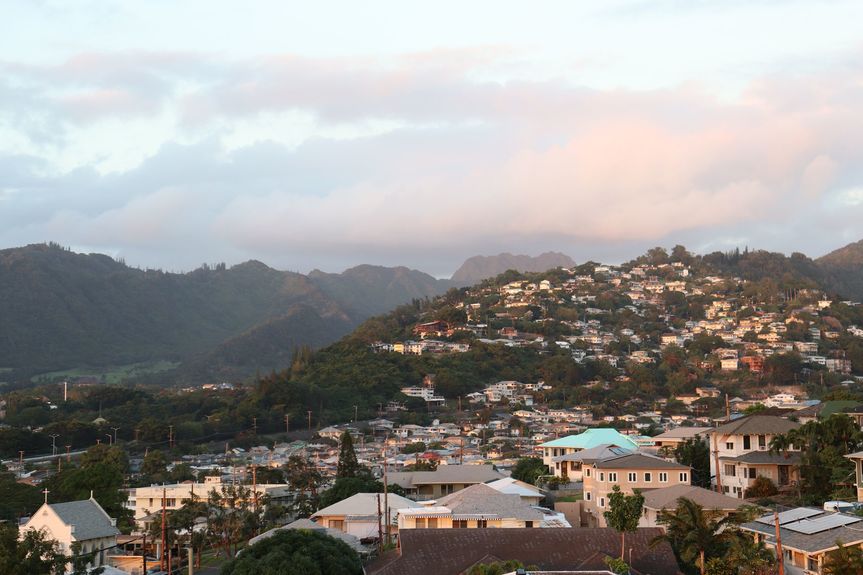
Kāneʻohe covers several distinct real estate markets. Waterfront homes, hillside subdivisions, older residential streets, golf-course neighborhoods, and valley communities can feel very different from one another — and they come with different due-diligence questions.


Living here
Kāneʻohe has a distinctly Windward rhythm: more rain and greenery, easy access to the bay and mountains, and a town center with the services most residents need day to day.
Windward Mall has served as a central shopping destination since 1982, with retail, a theater, restaurants, and everyday services. Windward City Shopping Center along Kāneʻohe Bay Drive provides groceries and additional local services.
Heʻeia Pier and the boat ramps provide access to Kāneʻohe Bay for paddling, sailing, and kayaking. Hoʻomaluhia Botanical Garden sits below the Koʻolau cliffs, while the Valley of the Temples, Byodo-In Temple, and Heʻeia Fishpond are also nearby.
Kāneʻohe has three major routes toward Honolulu: H-3 through the Koʻolau, Likelike Highway into Kalihi, and Pali Highway through Nuʻuanu. Depending on destination and traffic, town is roughly 20–35 minutes away.
School assignment is determined by address. The source identifies schools including Heʻeia and Ahuimanu elementary, Benjamin Parker, King Intermediate, and Castle High, but the current DOE assignment should be verified for every property.
Before you buy
Kāneʻohe rewards buyers who investigate the property beyond the house itself. Flood exposure, wastewater, military flight paths, shoreline conditions, moisture, and permits can materially change the ownership picture.
The market
Market conditions change. The figures below are a starting point. If you would like the full picture for a specific street or property, ask me.
Questions worth asking
A few practical questions buyers often have before they start narrowing down properties in Kāneʻohe.
Generally, yes. Comparable house and lot sizes are often more attainable in Kāneʻohe, with the trade being more rain, less beach access immediately within the neighborhood, and a more residential town character.
It depends heavily on the specific location. Some neighborhoods hear very little, while others sit under active flight paths and experience significantly more aircraft noise during training cycles. Visiting the property at different times is worthwhile.
Parts of it do. The area is low-lying, crossed by streams, and receives substantial rainfall. Check the FEMA flood zone, insurance cost, and drainage of the specific property.
Some are, particularly in the valleys. Confirm the wastewater system before writing an offer and understand any applicable conversion requirements.
Some bayfront properties have boat access, and there are ramps and moorings around the bay. The specific property determines what is actually permitted, including any dock rights or existing permits.
Roughly 20–35 minutes depending on the destination and time of day. Kāneʻohe has access through H-3, Likelike, and Pali, giving commuters multiple routes into town.
Kāneʻohe offers a broader range of housing markets, more interior valley and hillside neighborhoods, and multiple routes toward Honolulu. The trade is a wetter environment and a more detailed set of questions around flooding, wastewater, and military flight paths.
Continue exploring
If Kāneʻohe is close to what you're looking for, these nearby neighborhoods may be worth exploring as well.
Considering Kāneʻohe?
Thinking about buying or selling in Kāneʻohe? Tell me what draws you here and what you already know. I'll help you understand the neighborhood, the local market, and the details worth checking before you decide.
Share My QR |
|